May 5, 2026 · The Signal · Fintech × E-Mobility
⚡ THE SIGNAL
The Wallet Is the Engine
Two deals this week expose the same truth: Africa's electric mobility revolution isn't stuck on battery chemistry or charging infrastructure. It's stuck on financing. And fintech just found the unlock.
WHAT HAPPENED
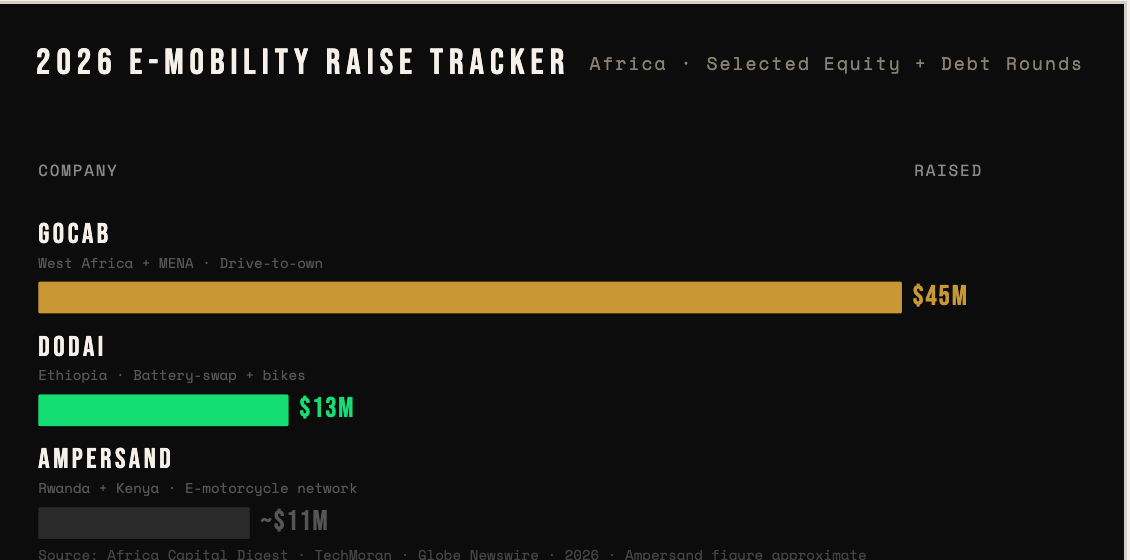
Last week, Ethiopian e-mobility startup Dodai closed a $13M Series A $8M equity, $5M debt backed by British International Investment (BII) and a cluster of Japanese development-finance investors. The company has deployed over 2,000 electric motorbikes in Addis Ababa, assembled locally, with a battery-swapping network riders can top up in minutes. Monthly payment plans start at 8,000 Ethiopian birr (~$62) through Vision Fund, a microfinance partner. Three-year target: 30,000 users, 1,000 swap stations then onward to Abidjan, Kinshasa, Accra, and Dar es Salaam.
Three months earlier, pan-African GoCab pulled in $45M ($15M equity + $30M debt) from Janngo Capital, E3 Capital, and KawiSafi Ventures to scale its drive-to-own vehicle financing platform across West Africa and MENA. Built on Shariah-compliant structured finance, GoCab links daily driver repayments directly to ride-hailing income turning the vehicle into both the collateral and the bank account. ARR sits at $17M across five markets after just 18 months of operations.
THE DEALS AT A GLANCE
DODAI 🇪🇹 Ethiopia
-
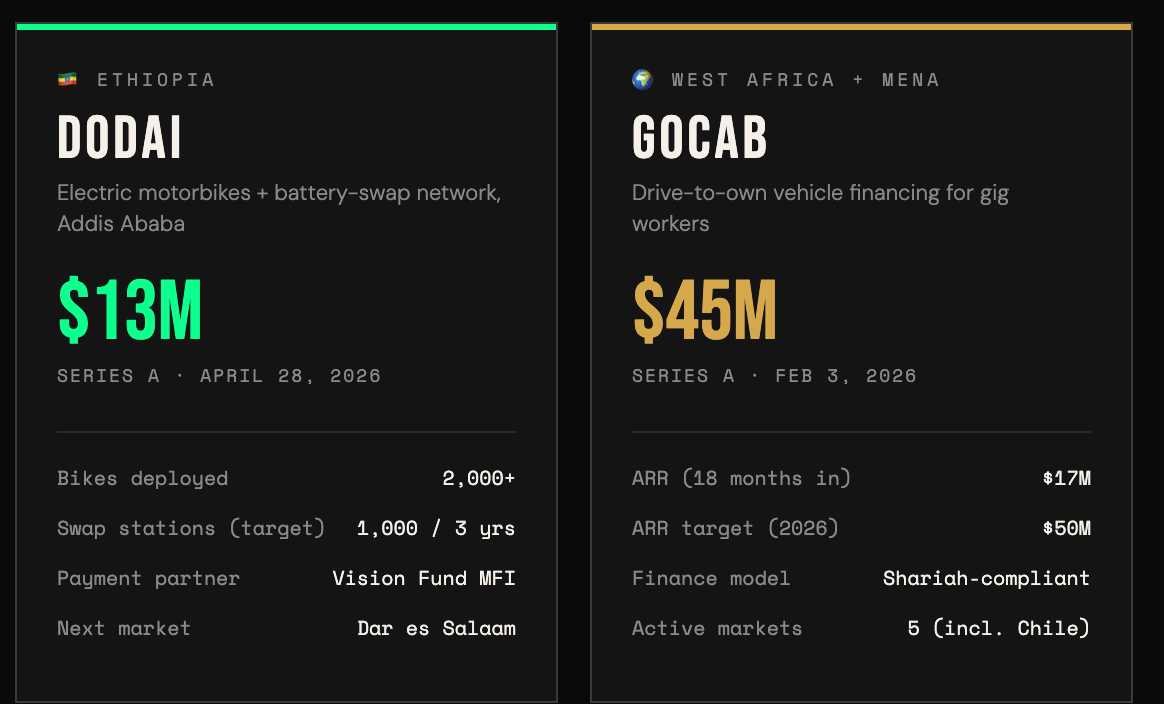
Round: $13M Series A (April 28, 2026)
-
Split: $8M equity + $5M debt
-
Backers: BII, Value Chain Innovation Fund, UTokyo Innovation Platform, Nagase & Co.
-
Bikes deployed: 2,000+
-
Swap station target: 1,000 stations / 3 years in Addis Ababa
-
Payment partner: Vision Fund (microfinance), from 8,000 birr/month (~$62)
-
Next expansion: Abidjan · Kinshasa · Accra · Dar es Salaam
GOCAB 🌍 West Africa + MENA
-
Round: $45M (February 3, 2026)
-
Split: $15M equity + $30M debt
-
Backers: Janngo Capital, E3 Capital, KawiSafi Ventures, Cur8 Capital
-
ARR: $17M (18 months in) → targeting $50M by end of 2026
-
Model: Shariah-compliant drive-to-own, daily repayments tied to driver income
-
Active markets: 5 (Côte d'Ivoire, Senegal, Morocco, Abu Dhabi, Chile)
WHY IT MATTERS
These are not two mobility stories. They are one financing story, told with different vehicles.
In both cases, the electric asset is the hook but the structured repayment mechanism is the real product. Dodai uses microfinance. GoCab uses asset-backed structured debt. Both use the rider's daily income as the underwriting signal.
This matters because Africa's e-mobility sector has a supply problem that looks like a demand problem. Riders want electric lower fuel costs, lower maintenance, better margins. But they can't access the upfront capital. Banks won't touch informal gig workers. That's the gap. And the companies closing this week's rounds aren't just building bikes or buying cars they're building the credit infrastructure that didn't exist.
Dodai's founder, Yuma Sasaki, chose Ethiopia deliberately not Lagos or Nairobi. "Nigeria and Kenya are attractive but crowded," he said. "Ethiopia has fewer competitors. That means more impact if we succeed." Ethiopia sweetened the bet further: in January 2024, it became the first country on the continent to ban the import of fuel-powered vehicles and it currently spends $4.5 billion per year on fuel imports it's trying to eliminate. For an EV startup, that's not a headwind. That's a tailwind with government branding.
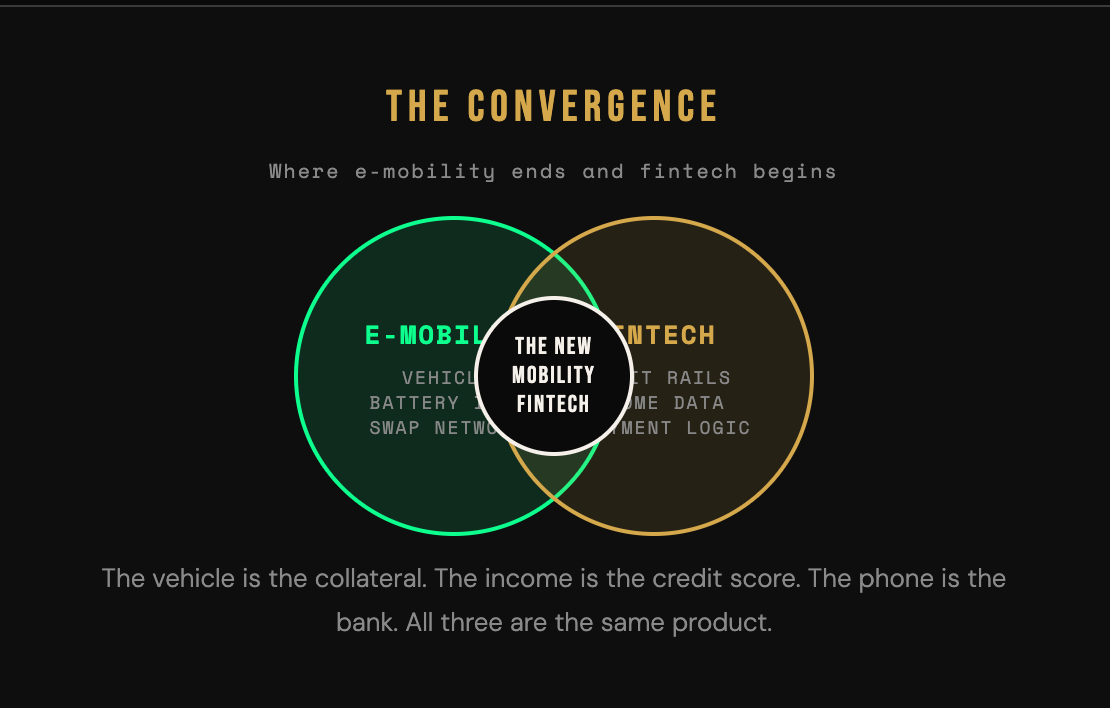
"The vehicle is the collateral. The rider's daily income is the credit score. The phone is the bank. These are all the same product just described by different industries."
WHAT TO WATCH NEXT
01 — Dar es Salaam enters the frame Dodai named DSM as an expansion city. That's a market signal, not a press release flourish. Watch for local e-mobility operators and incumbent boda owners to respond fast. East Africa's last-mile logistics market is about to get more competitive.
02 — DFI debt as the real fuel BII's $5M debt tranche to Dodai is part of its new 2026–2031 strategy: 25% of new investments into frontier markets, 40% into climate finance. That capital pipeline is substantial. But it needs fintech repayment rails to flow through. Companies that build those rails first will attract the next wave of DFI money.
03 — Regulation as competitive moat Ethiopia's fuel-import ban makes it the world's most EV-supportive regulatory environment by design. Expect other governments — especially across East Africa — to study this playbook. Policy momentum, not just VC momentum, is what de-risks these markets for international investors.
⚡ CHARGED TAKE
The next wave of African fintech won't be built inside a bank. It will be assembled in a workshop in Addis Ababa, strapped to a motorbike, and repaid in daily instalments from a boda rider's mobile wallet. The question isn't whether this model works — Dodai's 2,000 riders and GoCab's $17M ARR say it does. The real question is which continent copies it from us first.
Sources: Africa Capital Digest, TechMoran, Tech In Africa, Globe Newswire, Daba Finance, BII Press Release April/May 2026
CHARGED · chargedafrica.com Fintech × E-Mobility across Africa · Published every Monday & Saturday