
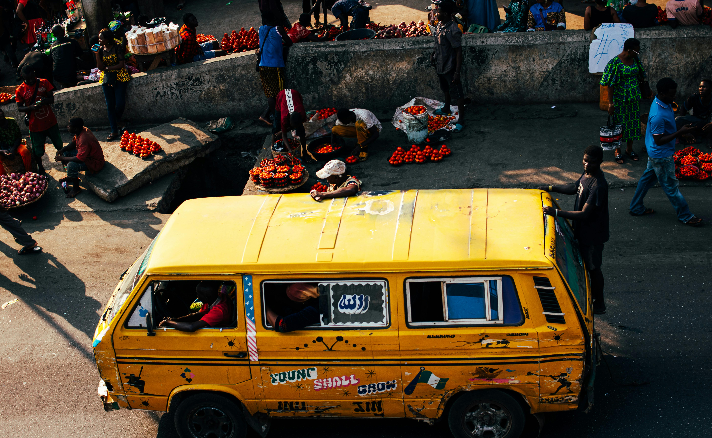
THE STABLECOIN JUST JOINED A SACCO
Kenya gazetted 116 pages. Thirty per cent of every licensed stablecoin now has to sit inside a Kenyan bank.
Hi, movers 👋
We have spent two years saying the same thing about stablecoins in Africa.
They route around the banks. They are cheaper. They are faster. Nobody has to give you permission.
On July 22, Kenya published 116 pages that quietly disagree.
Imagine you want to issue a shilling stablecoin in Nairobi.
You raise your capital. The Central Bank wants KSh 300 million paid up before you mint a single token. Plus liquid capital of KSh 60 million, or 100% of current liabilities for 30 days, whichever is higher.
You get past that. Now you read what you are allowed to hold against the coins you issue.
Cash. Central bank reserve deposits. Bank deposits. Government securities with 90 days or less to run. Repos of no more than seven days, backed by cash or central bank deposits.
And at least 30% of everything you take in must sit in a segregated account at a commercial bank domiciled in Kenya.
Read that list again.
That Is Not a Crypto Rule
That is a bank's balance sheet.
Short-dated government paper, overnight repos, cash at the central bank — this is the asset side of a narrow bank, written into a virtual assets regulation.
The instrument built to route around the banking system now has to keep a third of its money inside it.
This Has Happened Before in Nairobi
Anyone who has ridden a matatu knows how this ends.
Matatus began as the informal answer to a bus system that did not work. Fast, cheap, ungoverned, and everywhere.
Then came the SACCOs. Route licences. Painted numbers. Speed governors. Cashless fare rules.
The matatus did not disappear. They are still the way Nairobi moves.
They just stopped being a rebellion and became infrastructure.
A stablecoin issuer in Kenya has just been handed its SACCO membership.
Where the Money Actually Was
Here is why the reserve list matters more than the licence.
A stablecoin issuer does not make money on the coin. It makes money on the float — the yield thrown off by the reserves backing it.
Kenya has now capped the duration of those reserves at 90 days, capped the repos at seven, and pushed 30% into bank deposits.
Thin yield. No duration. A KSh 300 million floor before you start.
The regulation did not ban the business model. It squeezed the margin until only volume can survive it.
So Who Gets a Licence?
Whoever already has deposits, a compliance function, and a balance sheet that does not notice KSh 300 million.
Banks. Mobile money incumbents. The largest exchanges.
During the four-month consultation that began in March, crypto firms said exactly this — that the capital and compliance requirements would price smaller operators out of the regulated market.
The capital thresholds went through intact.
This is worth sitting with, because Kenya is not a small market. Chainalysis put roughly $19 billion of crypto inflows through the country between July 2024 and June 2025, second in the region behind Ethiopia. That volume is not going away. It is changing hands.
And Nigeria Moved Twelve Days Later
On August 3, Nigeria issued its first tax framework for crypto and virtual assets.
Two of Africa's largest digital asset markets, twelve days apart, reaching for two different instruments.
Kenya licensed it. Nigeria taxed it.
Neither banned anything. Both did something more consequential: they made the sector legible, countable, and addressable which is the precondition for everything that comes after.
One number before you go: what share of a licensed Kenyan stablecoin's intake must sit in a Kenyan commercial bank? (Answer below.)
The East Africa Line
Tanzania has published nothing comparable, and that is now a live decision rather than a gap.
The Kenyan file gives our regulators a fully drafted template and a natural experiment running next door. The awkward part is that a template written for a $19 billion market imposes a KSh 300 million floor. Ported unchanged into a smaller market, that floor does not filter for quality. It filters for foreign incumbents.
At Ramani, the thing that made SME lending hard was never the absence of rules. It was rules calibrated for balance sheets that our customers would never have.
The CHARGED Read
The comfortable read is that Kenya legitimised stablecoins. It did.
The accurate read is that it defined them as a regulated deposit-taking business with a token attached, supervised by the Central Bank, funded by whoever can already afford to wait.
The matatu still runs. It just runs on somebody's route now.
Africa's stablecoin question is no longer who can move a dollar fastest.
It is who can afford to be allowed to.
The answer is 30%. The rebellion has a licence plate.